Bristol Cultural & Historical Foundation

History Flows Through Bristol

The Little Schoolhouse That Never Stopped Teaching
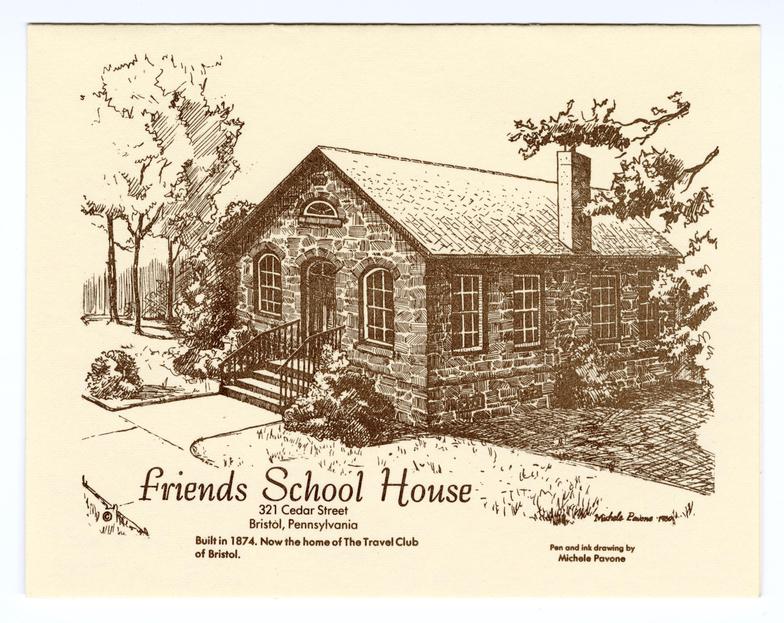
Nestled quietly along Cedar Street stands one of Bristol's most enduring storytellers. At first glance, the stone building at 321 Cedar Street appears modest, almost understated among the many historic structures that dot the borough. Yet for more than 150 years, this former Quaker schoolhouse has served the community in ways its builders could scarcely have imagined.
Constructed in 1874 by Bristol's Society of Friends, the building began its life as a place of learning. Within its stone walls, local children gathered to receive an education guided by the Quaker principles of simplicity, equality, and respect. Long before modern classrooms, computers, and interactive whiteboards, students sat at wooden desks, read from well-worn books, and learned lessons that would help shape their lives.
As Bristol grew and changed, so did the little schoolhouse. Its original purpose eventually faded, but the building itself remained an important gathering place. Community organizations found a home there, including veterans' groups and civic clubs. For generations of Bristol residents, the building continued to be a place where neighbors met, ideas were shared, and friendships were formed.
By the late twentieth century, the structure had already witnessed countless changes in the town around it. It had stood through the age of steamships on the Delaware, the rise of the railroad, two World Wars, and the transformation of Bristol into the vibrant community it is today. Many historic buildings disappear during such times of change. This one survived.
In 1991, a new chapter began when the Bristol Cultural and Historical Foundation acquired the property. The transition seemed fitting. A building originally dedicated to education would once again become a place where people come to learn. Today, visitors step through its doors not for arithmetic or penmanship, but to discover the stories of Bristol's past. It serves as headquarters, meeting place, and launching point for the Foundation's many efforts to preserve and celebrate local history.
The building's significance extends beyond its stone walls. Between 2016 and 2017, archaeological investigations on the property uncovered artifacts that offered additional clues about Bristol's past. The site was subsequently recognized by the Pennsylvania Historic Preservation Office as an archaeological site, adding another layer to its historical importance.
Perhaps what makes 321 Cedar Street so special is that it has never truly stopped fulfilling its original mission. Although the lessons taught there have changed, the building remains dedicated to education. Instead of teaching schoolchildren their letters and numbers, it now teaches residents and visitors about Bristol's rich heritage, its people, and the events that shaped the town.
For more than a century and a half, this humble stone schoolhouse has watched Bristol evolve around it. Through every chapter, it has remained a place where knowledge is shared and stories are preserved. In many ways, the building itself has become one of Bristol's greatest teachers—quietly reminding us that understanding our past helps guide our future.